Raymond Ibrahim is a best-selling author, historian, and one of today's most outspoken authorities on Islamic history, doctrine, and conflict. For nearly 25 years, his scholarship and commentary have challenged mainstream narratives and exposed truths about Islam and the West that few dare to confront. He has published over two thousand articles and essays—all archived here on his official website.
His bestselling books include
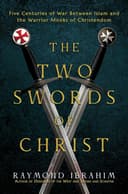
Five Centuries of War between Islam and the Warrior Monks of Christendom
The Christian Heroes Who Stood Against Islam
Fourteen Centuries of War between Islam and the West
Exposing Islam's New War on Christians
The Essential Texts of Osama Bin Laden's Terrorist Organization
An Assessment of the Immediate Factors behind the Islamic Conquests
Mr. Ibrahim has contributed to numerous anthologies, written forewords to key works, and had his books translated into several languages.
Before being "canceled" for his candor, he appeared regularly on major outlets such as CNN, C-SPAN, Fox News, MSNBC, NPR, PBS, Reuters, and Al-Jazeera. His op-eds, analyses, and translations have also been featured in The New York Times Syndicate, LA Times, Fox News, Financial Times, Jerusalem Post, USA Today, Washington Post, Washington Times, and Weekly Standard. Scholarly journals including Hoover Institution's Strategika, Middle East Quarterly, and Jane's Islamic Affairs Analyst have likewise published his work, as have popular platforms such as American Thinker, Breitbart, Christian Post, PJ Media, National Review Online, NewsMax, LifeSiteNews, and The Stream.
A sought-after expert on Islam and its history, Mr. Ibrahim has lectured at numerous universities and institutions, including the U.S. Army War College and the National Defense Intelligence College, briefed U.S. Strategic Command and the Defense Intelligence Agency, provided expert testimony in Islam-related legal cases, and testified before Congress on both the conceptual failures shaping American discourse on Islam and the worsening persecution of Christians across the Islamic world. He continues to speak at international conferences and before parliamentary bodies.
Born in the United States to Egyptian parents, Mr. Ibrahim possesses equal fluency in English and Arabic and a rare understanding of both Western and Middle Eastern mentalities—allowing him to interpret one world to the other with native precision. His lifelong engagement with the Middle East began with childhood visits to Egypt in the 1970s, where decades of firsthand experience deepened his appreciation for the region's culture, faith, and contradictions.
He earned his B.A. and M.A. in History from California State University, Fresno, specializing in the ancient and medieval Near East and studying under Victor Davis Hanson. He also pursued graduate work at Georgetown University's Center for Contemporary Arab Studies and at Catholic University of America, focusing on Medieval Islam and Semitic languages. His M.A. thesis examined an early Byzantine-Islamic clash using Arabic and Greek texts.
Before become a fulltime professional writer in 2009, Mr. Ibrahim served as an Arabic-language and regional affairs specialist at the Library of Congress's African and Middle Eastern Division, where he assisted defense and intelligence officials in counterterrorism and regional studies, as well as the Congressional Research Service.
His command of Arabic sources has produced several groundbreaking revelations. In 2012, days before the Obama administration falsely blamed an anti-Islam film for uprisings in Libya and Egypt, Mr. Ibrahim revealedthat the attacks were pre-planned and unrelated to the movie. He was also the first to expose a Saudi fatwa calling for the destructionof all Christian churches on the Arabian Peninsula.
Since July 2011, he has produced Muslim Persecution of Christians, a monthly report (published by the Gatestone Institute) documenting the widespread abuses and massacres of Christians throughout the Islamic world. Now exceeding 180 installments—each 3,500 to 4,500 words—these reports form a living chronicle of religious persecution and a continuation of the work begun in his 2013 book Crucified Again.
In November 2024, Mr. Ibrahim relaunched his long-dormant YouTube channel—now known as the Holy War Channel—bringing his decades of scholarship, primary-source expertise, and historical insight to a rapidly growing global audience.
Raymond Ibrahim is currently a Visiting Fellow at the Danube Institute, the Distinguished Senior Shillman Fellow at the Gatestone Institute and the Judith Friedman Rosen Fellow at the Middle East Forum. Through his books, articles, lectures, and videos, he continues his mission: to expose historical amnesia, defend the persecuted, and illuminate the enduring clash of civilizations shaping our world.