Israel vs. Islam: The False Moral Seesaw
.png&w=3840&q=75)
A recent development—both striking and troubling—has become increasingly difficult to ignore: the seemingly universal tendency to view Islam and Israel as inextricably linked.
Across political, ideological, and cultural lines, many observers now treat Islam and Israel as inseparable concepts, locked into a rigid either–or framework. In this view, the two are mutually exclusive: if one is good, the other must be bad; if one is bad, the other must therefore be good.
This inversion has become particularly evident as Israel faces mounting criticism. For decades, the prevailing assumption ran as follows: if Islam is bad, then Israel must be good. Today, however, the syllogism has flipped on its head. Increasingly, we are told—explicitly or implicitly—that if Israel is bad, then Islam must be good.
This is flawed reasoning.
Consider what this assumption entails. The policies and actions of a tiny Jewish state, barely seventy-seven years old, are now said to define—or even redeem—the religion, history, and behavior of nearly two billion Muslims worldwide.
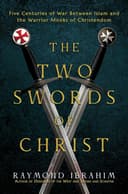
Whatever one’s views of Israel, such reasoning collapses under even minimal historical scrutiny. Historically, Islam has been—and in many respects continues to be—the West’s most persistent civilizational adversary. I have documented this extensively in my own work, from Sword and Scimitar, which examines Islam’s historic conquests of Christendom, to Crucified Again, which details the modern persecution of Christians in the Muslim world.
The historical record speaks for itself.
From its very inception in the seventh century, Islam emerged as a militant faith that expanded primarily through violent conquest—above all against Christian lands and peoples. What is today described as the “heart” of the Muslim world—the Middle East and North Africa, stretching from Iraq to Morocco—was once the heartland of Christendom. Islam violently conquered it all.
For centuries thereafter, Islamic forces repeatedly assaulted Europe, the last bastion of Christian civilization. Nearly a millennium after Muslims overran Christian Spain in 711, they stood at the gates of Vienna in 1683. Even the United States was not immune. America’s first war as a nation—the First Barbary War of 1801—was fought against Muslim states that raided American ships and enslaved their sailors.
When Thomas Jefferson asked the Barbary envoy, Abdul Rahman, to explain why Muslims were terrorizing Americans, the answer was unambiguous. As Jefferson later wrote to Congress,
We took the liberty to make some inquiries concerning the grounds of their pretentions to make war upon nations who had done them no injury, and observed that we considered all mankind as our friends who had done us no wrong, nor had given us any provocation. The ambassador answered us that it was founded on the laws of their Prophet, that it was written in their Koran, that all nations who should not have acknowledged their authority were sinners, that it was their right and duty to make war upon them wherever they could be found, and to make slaves of all they could take as prisoners, and that every Muslim who should be slain in battle was sure to go to Paradise.
Here’s the lynchpin: Israel did not exist during any of this.
Indeed, during more than a thousand years of Islamic jihad against Christendom, there was no Jewish state to provoke, justify, or explain Muslim behavior. Israel’s brief existence—whether one applauds or condemns its policies—tells us nothing about Islam’s historical or contemporary relationship with the West.
Criticism of Israel, therefore, does not exonerate Islam. To suggest otherwise is to embrace a false—and dangerous—dichotomy.
To underscore this point, consider Hilaire Belloc (1870–1953), one of Europe’s most prominent intellectuals. Belloc, writing in 1938—more than a decade before Israel came into existence and at a time when the Islamic world was at its weakest relative to the West—offered a prescient warning:
Millions of modern people of the white civilization—that is, the civilization of Europe and America—have forgotten all about Islam… They take for granted that it is decaying, and that it is merely a foreign religion which will not concern them. It is, as a fact, the most formidable and persistent enemy which our civilization has had, and may at any moment become as large a menace in the future as it has been in the past. [From his The Great Heresies, 1938]
By today’s standards, Belloc’s criticism of Islam would almost certainly be dismissed as support for Israel. Yet Belloc was hardly a champion of Jewish causes. In fact, his 1922 book The Jews has led many critics to label him an anti-Semite.
Belloc thus serves as living proof that one can regard Islam as the West’s “most formidable and persistent enemy” without doing so in defense of Israel. The two are not inherently connected, regardless of how frequently they are conflated today.
To reiterate: condemning Israel does not require sanctifying Islam. Islam, practiced by nearly two billion people across vastly different cultures and regions, cannot be reduced to—or redeemed by—a localized political conflict.
The Israeli–Palestinian dispute tells us little about Islam at large. Meanwhile, millions of Muslim migrants are destabilizing parts of Europe, and jihadist organizations—ISIS being merely the most notorious—continue to terrorize “infidels” across Africa, Asia, and the Middle East, including Israel itself.
Are we seriously to believe that the existence of a Jewish state is necessary to explain patterns of Islamic behavior that have existed since the dawn of Islam fourteen centuries ago?
Obviously not.

Please share your thoughts on this article on X
Click here