"Slaughtered Simply Because They Refuse to Abandon Their Faith": The Muslim Persecution of Christians, September 2025
The following are among the abuses and murders inflicted on Christians by Muslims throughout the month of September 2025.
The Muslim Slaughter of Christians
Democratic Republic of the Congo: On Sept. 9, right before dawn, Muslim terrorists of the Allied Democratic Forces (ADF) attacked and slaughtered more than 70 Christians who were gathered for a wake. What was meant to be a night of mourning for a deceased loved one became a bloodbath as women, children, and men were gunned down. After the carnage, the jihadists torched homes, two trucks, and four motorcycles, leaving families bereft of shelter and possessions. “That’s how they operate, that’s how they act,” said a local administrator: “You know, it’s a terrorist group [the ADF]. And like all terrorist groups, their objective is often to instill fear in order to force the population to join their movement. That’s why they behave this way.” Rev. Samuel Kambale emphasized the religious motive: “Our people are being slaughtered simply because they refuse to abandon their faith and their homes…We cry for justice….”
Separately, on Sept. 23, the Islamic terrorists targeted several Christian villages, killing at least six and setting many homes ablaze. The carnage could have been greater, had a local youth self-defense force known as Wazalendo not mobilized quickly: “This resistance helped to limit the damage,” said a local. “If the Wazalendo had not acted quickly, the number of deaths would have been much higher. Still, the fear remains, because the rebels can strike again at any time, and people no longer feel safe even in their own homes.”
Mozambique: According to a Sept. 17 report, Muslim militants slaughtered another 17 Christians in Cabo Delgado Province, and torched numerous homes, over the preceding three weeks. This is part of a continuing wave of attacks by the Islamic State Mozambique (IS-M), which has been active in northern Mozambique since 2017, killing an estimated 1,800 Christians and displacing more than half a million people. The militants also target humanitarian relief. Roadblocks have been established to intercept travelers, particularly Christians, who are charged “tolls” ranging from $150 to $460 to continue their journeys. IS-M continues to explicitly demand that Christians convert to Islam, submit to IS authority and pay jizya (tribute), or face death.
Nigeria: On Sunday morning, Sept. 7, armed Muslim herdsmen attacked Wakeh, a Christian village, killing at least nine and wounding eight. Survivors said the terrorists came on motorcycles and on foot, crying Islam’s war-cry, “Allahu Akbar,” firing indiscriminately, and setting homes ablaze. Mary Audu, who escaped with a wounded leg, recalled: “They called us infidels and said we should leave the land. I thought I would die there.”
According to a Sept. 3 report, following a spate of more attacks, Christian youth leaders in Plateau and Kaduna accused the Nigerian government of enabling these attacks on Christians through staged “peace meetings” that conceal Fulani militia violence. Organized by army officers and officials, these gatherings are presented to the public as reconciliation, but Christian survivors call them diversions “designed to mask atrocities, shield perpetrators, and convince foreign diplomats that progress is being made.” A few quotes from protesting Christian survivors and displaced victims follow:
· “They told us to forgive and move forward,” said a farmer, whose brother was killed. “But they never asked who committed the killings. They only wanted photographs of us sitting together in the hall, so they could show Abuja and the U.S. embassy that peace has been restored.”
· “When we said Fulani militias attacked us, they told us to stop spreading hate speech,” Mary Dauda of said. “But we saw their faces. Some of the same men were seated across from us in the so-called peace meeting.”
· “The soldiers said they would help us rebuild,” said Daniel of his destroyed village. “Instead, they took pictures of us with the attackers and left. Until today, our village is empty.”
· “They tell the international community there is peace,” said Rachel. “But in reality, we are refugees in our own land.”
· “They call it peace,” said an anonymous displaced farmer. “But for us, it is silence.”
The report adds that over 4,000 Christians have been slaughtered, and tens of thousands displaced, since just January 2025.
Niger: On Monday, Sept. 16, jihadist gunmen on motorcycles attacked Christian villages in the Tillaberi region, killing 22 villagers. Most of those murdered—15 Christians—were shot at a baptismal ceremony. Afterwards the terrorists moved to the village outskirts and killed seven more. Local media described the massacre as a “gruesome death toll of 22 innocent people cowardly killed without reason or justification.”
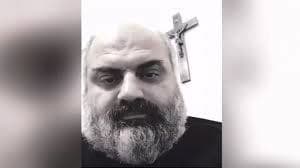
France: On Sept. 10, the same day Charlie Kirk was killed, Ashur Sarnaya, a 45-year-old disabled Iraqi Christian who had fled ISIS persecution in 2014, was fatally stabbed outside his Lyon apartment while livestreaming a testimony of his faith on TikTok. Ashur, an Assyrian who used a wheelchair, had lived quietly with his sister for over a decade in France, and was widely known for his kindness and faith. Witnesses said the Muslim attacker, who was dressed in black, appeared to be waiting for him and stabbed him in the neck before fleeing. A Muslim suspect from Algeria was arrested in Italy on Oct. 2 after evading capture for weeks. He was apprehended under a European arrest warrant for premeditated murder linked to Sarnaya’s religion. The attack sparked outrage and renewed debate over the protection of Christians in France, where anti-Christian incidents rose 13% in the first half of 2025. Observers warn that vulnerable religious minorities continue to face growing threats even in countries long considered safe havens for refugees from Islamic persecution.
Uganda: On Sept. 1, a Muslim high school student, Akram Kairoki, stabbed to death his 19-year-old brother, Shafiki Wasike, a day after he converted to Christianity. The assault occurred at Mbale High School. “Why should my brother stab me”—a classmate heard the apostate lament as he bled to death—“I have done nothing wrong to him. It is only changing my faith and joining the Christian faith.” During the teenager’s funeral, which was conducted by the pastor who led him to Christ, “family and clan members refused to touch the body, saying Wasike had become an infidel.”
Pakistan: On Sunday, Sept 7, Afzal Masih, a 44-year-old Catholic from Lahore, was shot dead and his cousin Harris Tariq Masih seriously wounded while traveling to the annual Feast of the Nativity of Mary shrine in Mariamabad, Punjab Province. The attack occurred in two stages: first, three Muslim men on motorcycles sexually harassed Christian women and girl passengers in the van, physically assaulted Afzal when he intervened, and verbally abused the Christians with curses and the pejorative term “Chuhra.” Later, at a gas station, the assailants returned armed with a Kalashnikov assault rifle, shooting Afzal in the neck and Harris in the arm. According to Kashif Nemat, of the Good Samaritan Society:
This incident is clearly an act of persecution on the basis of the victim’s religious identity. The other passengers who witnessed the gruesome attack on Afzal and Harris told us that they had covered their van with posters of the pilgrimage and cross signs which clearly identified them as Christians. Afzal had only stopped the assailants from teasing the women passengers, which offended them to the extent that they not only tortured him but returned with guns to kill him.
The police registered a case against Muhammad Waqas of Farooqabad and two unidentified accomplices, but no arrests have been made. Afzal Masih, a rickshaw driver, leaves behind a now financially destitute widow and four children.
Abduction, Rape, and Harassment of Christian Girls
Pakistan: According to a Sept. 3 report, a Christian father has been trying to recover his 13-year-old daughter, Maria Shahbaz, since July 31, when she was abducted by a 30-year-old Muslim man named Ahmed, forcibly converted to Islam, and married. Despite filing a First Information Report, the court accepted Maria’s coerced statement claiming she married of her “own free will” and was 18. Her father, Shahbaz Masih, insists the court is denying reality: “I’m still in disbelief that the magistrate admitted her claim that she was 18 years old, whereas her physical appearance also doesn’t support her claim.”
Human rights advocates say such kidnappings are common, with girls as young as 10 abducted, converted, and raped under the guise of Islamic marriage, while courts routinely ignore evidence of age. The case highlights Pakistan’s failure to enforce child protection laws, as Islamic authorities oppose raising the marriage age under sharia.
Separately, according to a Sept. 24 report, Maryam Hadayat, a fourth-grade student, regularly endures harassment from her Muslim classmates due to her Christian faith. “My fellows abuse my religion,” Maryam said. “They say Christianity is not a good religion and that I should convert to Islam.” Despite repeated complaints to her teachers, no action has been taken. When her grandmother intervened, the teacher promised to “look into the matter” but immediately scolded Maryam and threatened expulsion if she spoke of it again at home. The report adds that Christian children throughout Pakistan face similar systemic discrimination. Teachers often preach Islam, denounce the Bible as “corrupted,” mock the Trinity, and pressure students to convert. “These are not teachers,” lamented the young girl’s grandmother. “The government has hired clerics to preach Islam instead of teaching.” Muslim students reinforce this Islamic supremacist attitude, refusing to eat or drink with Christian classmates unless framed as a “privilege” for the lowly infidels.
Egypt: According to a Sept. 24 report, a 16-year-old Christian girl named Maryam was pressured by her public high school to wear the Islamic hijab, despite her faith. On her first day, the school principal scolded her: “You can’t come with your hair like that. It’s shameful. You have to come tomorrow wearing a scarf.” When Maryam refused, insisting, “but I’m Christian and not supposed to wear the hijab,” teachers and classmates began ostracizing her. “When I entered school without the scarf, everyone was shocked and looked at me as if I were naked,” she said. “I feel like I’m getting into a fight defending my freedom.” Maryam dreams of attending university freely, “with my hair spread over my shoulders, without anyone looking at me in a way that bothers me.” Her story highlights the quiet Islamization of Egypt’s public schools.
Generic Muslim Persecution of Christians
Sudan: According to a Sept. 17 report, “Christians have been told to either renounce their faith or face starvation under a campaign of brutal Islamist repression.” This comes in the midst of an ongoing civil war between General Abdel Fattah al-Burhan’s Sudanese Armed Forces (SAF) and Mohamed Hamdan Dagalo’s Rapid Support Forces (RSF). The conflict has already claimed the lives of around 150,000 Christians and displaced 15 million more. RSF fighters reportedly target those fleeing violence in El Fasher, often abducting, torturing, or demanding ransom from captives. Christians under SAF control are also vulnerable: multiple churches in Khartoum have been demolished, Christians arrested without explanation, and relief aid is frequently withheld. According to the report, “Neither side is sympathetic to Christians, and the conflict has given Islamist extremists more opportunity to target them. Christians are also experiencing exceptional hardship in the hunger crisis because local communities discriminate against them and won’t give them support.”
A local church leader adds:
When even NGOs (non-governmental organisations) want to distribute food, the category of people who will receive this relief is controlled by Government. So, Government in these places doesn’t give it to minorities. Often Christians here have been told: ‘Unless you leave your Christianity, no food for you’…. For a long time now, they’re eating animal feed and grass. No wheat, no rice, nothing can get in. And, unfortunately now, no medicine – if you have just the flu it can kill you. We are just always asking God to have mercy on us.
Turkey: According to a Sept. 5 report, violence and intimidation against Christians escalated last year, culminating with attacks on Salvation Church buildings. In January, a man fired at Eskişehir Salvation Church while it was empty; by year’s end, another assailant shot at a Salvation Church association building in Istanbul. Witnesses reported him shouting: “We will not allow you to brainwash our Muslim youth! Oh, infidels, you will be defeated and swept up into hell!” Pastor Ramazan Arkan of Antalya Evangelical Churches testified before the 58th Human Rights Council that “Turkish churches face many difficulties and much discrimination, and unfortunately, when we have tried to address those issues with the Turkish authorities, we have most often been ignored because Christians are the religious minority in Turkey.” Foreign missionaries are also targeted: residence permits are withheld or not renewed, and many are labeled security risks. Christians face online threats, harassment, and social isolation.
Iran: According to a Sept. 17 report, Mehran Shamloui, a Christian convert, has been denied a retrial by the Iranian Supreme Court and is currently serving a 10-year, 8-month sentence in Evin Prison. Arrested in 2024 for participating in a house church, he was charged with “propaganda contrary to Islamic law” and “membership in groups opposing the state.” After briefly posting bail, he fled Iran but was deported from Turkey in July 2025. Iran’s laws criminalize sharing the Christian faith and owning Farsi Bibles. The report adds that persecution intensified in 2024, with dozens of Christians imprisoned for peacefully practicing their faith.
Pakistan: According to a Sept. 24 report, another young Christian man, Asher Bhatti, is facing a fabricated blasphemy case. Muhammad Umair, a local bookstore owner, filed a complaint alleging that a Facebook profile named “Aserbhatti” posted derogatory content about the Islamic prophet Muhammad, adding that the Christian had commented on the posts, allegedly inciting hatred against Muslims. Under Pakistan’s blasphemy laws, Bhatti could face the death penalty or life imprisonment if convicted. Discussing this case, one human rights activist said,
This is another tragic example of how Pakistan’s blasphemy laws are being misused. Thousands of innocent people are languishing in prisons under false charges, and many have been murdered by vigilantes before trial. Social media is increasingly weaponized to settle personal scores and inflame communal tensions. Urgent reforms are needed to protect minorities and prevent abuse of Section 295-C.
Separately, according to a Sept. 22 report, Christian pastor Zafar Bhatti has been languishing in prison for 13 years over two “blasphemous” text messages he insists he never sent. Convicted under the Muslim nation’s blasphemy laws, the pastor has spent over a decade awaiting justice while courts repeatedly delay his appeal. At a recent hearing, one advocate questioned how such a long sentence could stand “without any forensic proof.” Yet proceedings continue to stall as the complainant’s lawyers skip hearings or invent excuses.
Finally, on Sept. 2, Christians ended a 17-day sit-in protest in Jaranwala, demanding justice for the Aug. 2023 Muslim attacks that destroyed and torched 25 churches and 85 homes, following false blasphemy accusations against Christians. The protest was prompted by government inaction: of 5,213 Muslim suspects arrested, most were released or remained at large, while courts acquitted others despite strong evidence. The Muslim attackers, fueled by false blasphemy claims, reflect a pattern of religiously-motivated violence targeting Christians, exacerbated by police negligence, the report notes: “The state should know that we will not rest until we get justice,” said one female protester.
United States: According to a Sept. 27 report, a Christian pastor was denied access to a chapel at Dallas-Fort Worth International Airport because Muslims were using it and unwilling to share their space with an infidel. Tom Ascol, a Southern Baptist pastor, was visiting the family of Voddie Baucham, another pastor who recently died. Hearing an announcement that the Meadows Chapel was open to all for prayer, Ascol went to join a service, hoping at least to hear Scripture read. Instead, he was denied entrance while other Muslims lay prostrate atop prayer rugs on the chapel floor. In a social media post Ascol wrote, “They blocked my way in the inner room. A man who had offered a loud prayer, not the Imam, said I could come in if I took my shoes off. I refused. He would not let me walk in. I did not want to create a scene a[nd] I left. Muslim prayer rugs lined the floors.”
The chapel is dedicated to honoring U.S. military service members. The report notes that dozens of online commenters expressed outrage— “Welcome to America, where we promote the Islam faith over all else in the name of inclusion,” wrote one—and shared similar experiences from other airports, raising broader concerns about access to public chapels for Christians.
Muslim Attacks on and Discrimination against Christian Churches
Indonesia: On Sept. 2, officials in Karanganyar Regency halted construction of the Immanuel Christian Church (GKIM) and the Holyland Bukit Doa religious tourism compound after pressure from local Muslims. The suspension cited fears of social conflict, despite the project having a valid construction permit. As an added pretext, government officials and council members claimed the project exceeded its original permit, noting that the compound resembled a “mini-Jerusalem” rather than a simple church. Several local Muslim organizations opposed the project. One issued a video of a Muslim figure saying, “We call on Muslims everywhere to reject this project because it will be a religious disaster for the future of the Muslim community, our children and grandchildren.”
Separately, in late September 2025, a Protestant congregation in Tangerang Regency faced repeated attacks from Muslim groups during Sunday services. On both September 14 and 21, at least 20 Muslims stormed shop-houses used as places of worship by the Bethel Indonesia Church, forcibly dispersing congregants. Videos circulated online show attackers shouting that the church lacked proper permits, threatening residents, and attempting to revoke identity cards of those supporting the congregation. “You cannot hold [Christian] activities here,” one man is heard yelling. “Go worship somewhere else, but not here.” The report adds that such attacks reflect a broader pattern of anti-Christian intolerance in Indonesia, where regulatory mechanisms are often weaponized to block Christian worship. Approval processes can take years, require local resident consent, and are frequently influenced by Muslim extremist pressure. Data from the Setara Institute documented 260 incidents and 402 violations of religious freedom in 2024 alone.
Egypt: According to a Sept. 11 report, Mount Sinai, the site where Moses received the Ten Commandments, is under threat from a state-backed luxury resort project that locals warn will irreparably disfigure one of the world’s most sacred Judeo-Christian landmarks. The Great Transfiguration Project aims to build five hotels, hundreds of villas, a 1.4-acre visitors’ center, and a shopping complex within the St. Catherine Protectorate, home to the 6th-century St. Catherine’s Monastery and numerous ancient biblical sites. “I call it the Grand Disfiguration Project,” said John Grainger, the former manager of a European Union project to develop the area. The project has especially provoked an outcry from the Greek Orthodox Church, which oversees St. Catherine’s Monastery. It condemns an Egyptian court ruling that effectively expropriated monastery lands, calling it an existential threat to Orthodoxy and Hellenic heritage. Observers stress that Egypt’s actions show a disturbing disregard for a site central to Jewish and Christian faiths. While the government frames the project as a “gift to the world,” locals and preservationists see it as an aggressive, top-down imposition, enforced by extensive security surveillance, that disrespects centuries of religious tradition and the sacredness of one of the Bible’s most hallowed sites. Any Egyptian who dares speak up is clamped down by an intricate and omnipresent security network. In the words of Ben Hoffler, a British travel writer and former resident of St. Catherine, “If they say anything about it, they get a knock on the door [from Egyptian security services]. The secret police in St. Catherine monitor everything so closely — phone calls, we’ve had spyware on telephones. They follow people literally in the street. I’ve been followed many times.”
Sudan: On Sept. 3, Islamic forces attempted to seize the Evangelical School of Sudan in Omdurman, even as hundreds of displaced Christians were sheltering there. Three men linked to an Islamic business interest group forcibly entered the campus, threatened the residents, and broke into the headmaster’s office, warning that they could take the facility by force. The school, owned by the Sudan Presbyterian Evangelical Church (SPEC), has been repeatedly targeted since the Bashir regime, with previous raids resulting in the deaths and injuries of church elders defending the community.
Raymond Ibrahim, author of Defenders of the West, Sword and Scimitar, Crucified Again, and The Al Qaeda Reader, is the Distinguished Senior Shillman Fellow at the Gatestone Institute and the Judith Rosen Friedman Fellow at the Middle East Forum.
About this Series
The persecution of Christians in the Islamic world has become endemic. Accordingly, “Muslim Persecution of Christians” was developed in July 2011 to collate some—by no means all—of the instances of persecution that occur or are reported each month. It serves two purposes:
1) To document that which the mainstream media does not: the habitual, if not chronic, persecution of Christians.
2) To show that such persecution is not “random,” but systematic and interrelated—that it is rooted in a worldview inspired by Islamic Sharia.
Accordingly, whatever the anecdote of persecution, it typically fits under a specific theme, including hatred for churches and other Christian symbols; apostasy, blasphemy, and proselytism laws that criminalize and sometimes punish with death those who “offend” Islam; sexual abuse of Christian women; forced conversions to Islam; theft and plunder in lieu of jizya (financial tribute expected from non-Muslims); overall expectations for Christians to behave like cowed dhimmis, or second-class, “tolerated” citizens; and simple violence and murder. Sometimes it is a combination thereof.
Because these accounts of persecution span different ethnicities, languages, and locales—from Morocco in the West, to Indonesia in the East—it should be clear that one thing alone binds them: Islam—whether the strict application of Islamic Sharia law, or the supremacist culture born of it.
Previous Reports:
- August, 2025
- July, 2025
- June, 2025
- May, 2025
- April, 2025
- March, 2025
- February, 2025
- January, 2025
- December, 2024
- November, 2024
- October, 2024
- September, 2024
- August, 2024
- July, 2024
- June, 2024
- May, 2024
- April, 2024
- March, 2024
- February, 2024
- January, 2024
- December, 2023
- November, 2023
- October, 2023
- September, 2023
- August, 2023
- July, 2023
- June, 2023
- May, 2023
- April, 2023
- March, 2023
- February, 2023
- January, 2023
- December, 2022
- November, 2022
- October, 2022
- September, 2022
- August, 2022
- July, 2022
- June, 2022
- May, 2022
- April, 2022
- March, 2022
- February, 2022
- January, 2022
- December, 2021
- November, 2021
- October, 2021
- September, 2021
- August, 2021
- July, 2021
- June 2021
- May, 2021
- April, 2021
- March, 2021
- February, 2021
- January, 2021
- December, 2020
- November, 2020
- October, 2020
- September, 2020
- August, 2020
- July, 2020
- June, 2020
- May, 2020
- April, 2020
- March, 2020
- February, 2020
- January, 2020
- December, 2019
- November, 2019
- October, 2019
- September, 2019
- August, 2019
- July, 2019
- June, 2019
- May, 2019
- April, 2019
- March, 2019
- February, 2019
- January, 2019
- December, 2018
- November, 2018
- October, 2018
- September, 2018
- August, 2018
- July, 2018
- June, 2018
- May, 2018
- April, 2018
- March, 2018
- February, 2018
- January, 2018
- December, 2017
- November, 2017
- October, 2017
- September, 2017
- August, 2017
- July, 2017
- June, 2017
- May, 2017
- April, 2017
- March, 2017
- February, 2017
- January, 2017
- December, 2016
- November, 2016
- October, 2016
- September, 2016
- August, 2016
- July, 2016
- June, 2016
- May, 2016
- April, 2016
- March, 2016
- February, 2016
- January, 2016
- December, 2015
- November, 2015
- October, 2015
- September, 2015
- August, 2015
- July, 2015
- June, 2015
- May, 2015
- April, 2015
- March, 2015
- February, 2015
- January, 2015
- December, 2014
- November, 2014
- October, 2014
- September, 2014
- August, 2014
- July, 2014
- June, 2014
- May, 2014
- April, 2014
- March, 2014
- February, 2014
- January, 2014
- December, 2013
- November, 2013
- October, 2013
- September, 2013
- August, 2013
- July, 2013
- June, 2013
- May, 2013
- April, 2013
- March, 2013
- February, 2013
- January, 2013
- December, 2012
- November, 2012
- October, 2012
- September, 2012
- August, 2012
- July, 2012
- June, 2012
- May, 2012
- April, 2012
- March, 2012
- February, 2012
- January, 2012
- December, 2011
- November, 2011
- October, 2011
- September, 2011
- August, 2011
- July, 2011

Please share your thoughts on this article on X
Click here