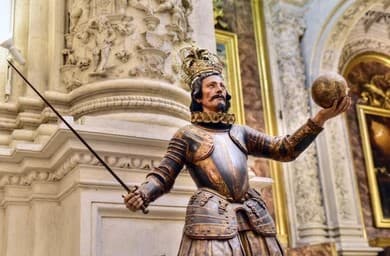
King Ferdinand III: A Man of Faith and Ferocity
By Joachim Osther
Protected by distance, oceans, and a Christian-based spirit of liberty, America has rarely experienced the wolves of humanity within our borders.
With the Pax Americana we largely find a Pax Christiana – an American Christendom rightfully focused on loving one’s neighbors and giving from the abundance of blessings.
But now the wolves have arrived.
American Leftist ideology has lurched into a hyper-violent, and decidedly anti-Christian, form of secularism, and highly credible intelligence points to Al Qaeda planning an attack on American soil using trained jihadists who are already here.
And so, we are faced with the pressing question – can men of the pax Christiana grasp the necessity and righteousness of muscular Christianity (to borrow a phrase from Raymond Ibrahim)?
Let’s face it, we’re in dire need of role models – men who embody the characteristics of a Christian warrior. Such men were abundant during a time when Christians were castigated, overrun, and enslaved en masse for their faith – much like modern-day Nigeria, but on a massive scale.
That’s where we’ll find men of both extraordinary faith and tremendous valor – men like King Ferdinand III of Castille.
Ferdinand – Man of Faith and Apex Warrior
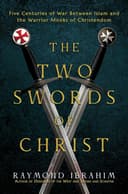
In his book, Defenders of the West: The Christian Heroes Who Stood Against Islam, Raymond Ibrahim recounts the harrowing stories of eight prolific warriors of deep faith who battled against jihadist aggression and unremitting attempts to overrun the European continent.
One of these heroes was King Ferdinand III.
Ferdinand is known as the Spanish king who led the penultimate thrust to oust Islamists occupying the Iberian Peninsula following generations-long invasions.
He was a tremendously pious Christian and an apex warrior – a mix of attributes that have been driven so deeply underground in the Christian conscience that they’re largely regarded as paradoxical in this hyper-sensitive 21st century.
Much like Timothy of the New Testament, Ferdinand was raised by his God-fearing mother and from a young age attended Mass daily. In fact, his Christian faith was so central to Ferdinand that his sisters were half-convinced he was destined for monkhood.
As he embarked on crusades of liberation, the deep faith of this warrior king was made manifest in humility. Not only did Ferdinand fight shoulder-to-shoulder with his men in the bloody tempest of medieval battle, but the king himself would also take his turn at night watch rotations when his army camped.
Ibrahim quotes extensively from primary source material describing that even in the midst of campaigns, Ferdinand regularly fasted, was often found in solitary prayer, and “wore a rough hair shirt made in the shape of a cross” underneath his armor to remind him of God’s holiness and grace.
The latter practice is bound to make the modern Christian wince and maybe even scoff. But for Ferdinand, humility and austerity were necessary tools to remind him of his proper station in the providence of his Creator. It was his way of fending off temptations for excessiveness and the spirit of self-importance that so often infects those of wealth and power throughout mankind’s sordid history.
Moved by faith, Ferdinand had a deep desire to extend the gains of the Spanish Reconquista - freeing Christians and liberating the lands that invading jihadists had conquered.
A prodigious warrior and military strategist, he led a series of crucial campaigns and successive victories, capturing the stronghold of Córdoba in 1236, Jaén in 1246, and Seville in 1248. The jihadists would never recover from the Spanish king’s thrust, and the Reconquista would soon come to a successful end.
Ferdinand was so highly regarded that he was canonized in 1671 by the Catholic Church, joining his Crusader cousin, King Louis IX, who was previously canonized in 1297.
Behold the Mighty Men
Any half-awake Christian recognizes that the wolves of humanity are now in our midst.
Admittedly, the current tension and volatility will make difficult demands for the humility and patience needed to love our enemies and be quicker with mercy than with anger.
But if we do not wish to be overrun by Globalists and extreme-lurching Leftists, or be caught unprepared amidst the specter of domestic jihadist attacks, then we best revisit the mindset of Christian heroes of the past – men like Ferdinand who embodied forgiveness, meekness, and love while taking the responsibility to ferociously wage war in defense of Christians, country, family, and self against unrighteous and dangerous enemies.
Perhaps that’s what makes Ibrahim’s book so timeless: The stories of these Christian warriors that saved the West from Islamization shakes off the romantic mystique of medieval knights and the nakedly false notion that we moderns are somehow morally superior.
Read about him and you will envision Ferdinand in modern clothes – because unfortunately we may need to learn how he embodied deep faith and a warrior ethos.
Joachim Osther is a freelance writer focusing on the intersection of culture and Christianity, and a contributing commentator at The Stream.org. Osther has also published on American Thinker, and contributes to RaymondIbrahim.com, chronicling the relevance of historical clashes between militant Islam and the West.

Please share your thoughts on this article on X
Click here